
 Čeština
 Slovenčina
 Hrvatski
 Română
 Magyar
 български език
 Deutsch
 Français
 Українська
 Nederlands
 Polski
What to look for when choosing an electronic drum kit?
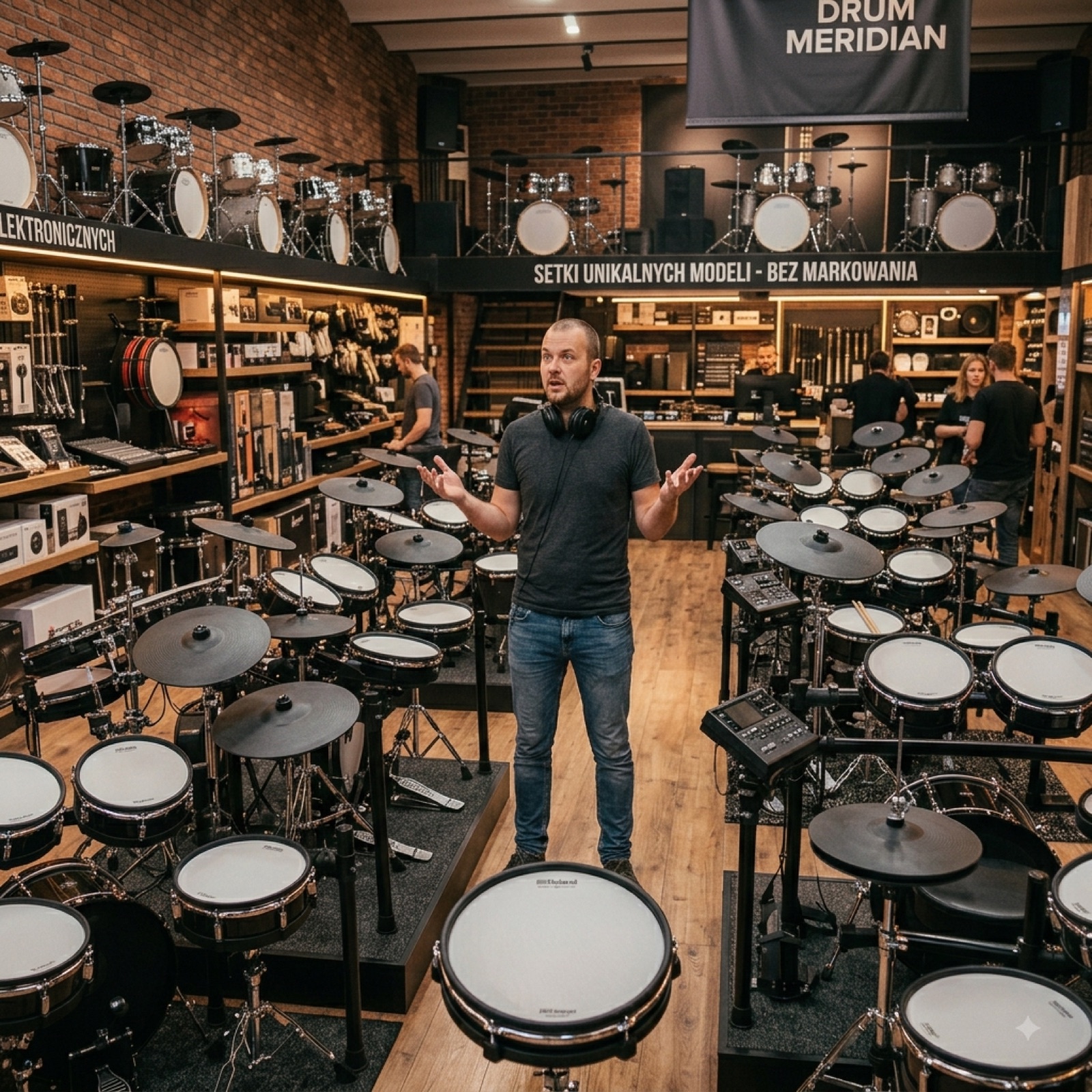
Mesh pads, zones, hi-hat and the module — what to really look at when buying, so the instrument doesn't end up in the corner of the room.
Most guides start with the budget. We'll start with something else, because this is where the wrong decision is most often made: with what the instrument will be to you in a year.
A kit bought "just to try", the cheapest available, usually ends up in the corner after three months — not because the wish to play went away, but because playing it was uncomfortable. Below are the things that really decide whether an instrument gets used.
Pads: mesh instead of rubber
This is the single most important parameter. Rubber is hard, loud and tires the wrists. A mesh head rebounds the stick much like a real head, is quieter and lets you adjust the tension to suit yourself.
If you were to remember one thing from this whole text: don't buy a kit with rubber pads on the snare and toms.
Zones, or how many sounds one pad has
A single-zone pad manages only one stroke. A dual-zone one distinguishes the centre of the head from the rim, so you can play a rimshot and a cross stick. A three-zone cymbal additionally tells the bell apart.
For practising rudiments a single zone is enough. For playing songs it is not. In the Black Hawk Pulse kits the snare has three zones, the toms have active rims, and the cymbals respond to hand damping.
Hi-hat: a pad or a real stand
A hi-hat on the rack with a separate pedal is cheaper and takes up less space. A hi-hat on its own stand behaves like an acoustic one — you feel the resistance, you control how far it opens, you set the height to suit yourself.
If you play with a move to an acoustic kit in mind, or with rehearsals in mind, it is worth paying extra for the version with a stand, that is the Pulse VH or Pulse Pro VH.
The module: look at the outputs, not the number of sounds
Manufacturers like to boast of hundreds of drum kits in memory. In practice you use three, maybe four. Something else matters more:
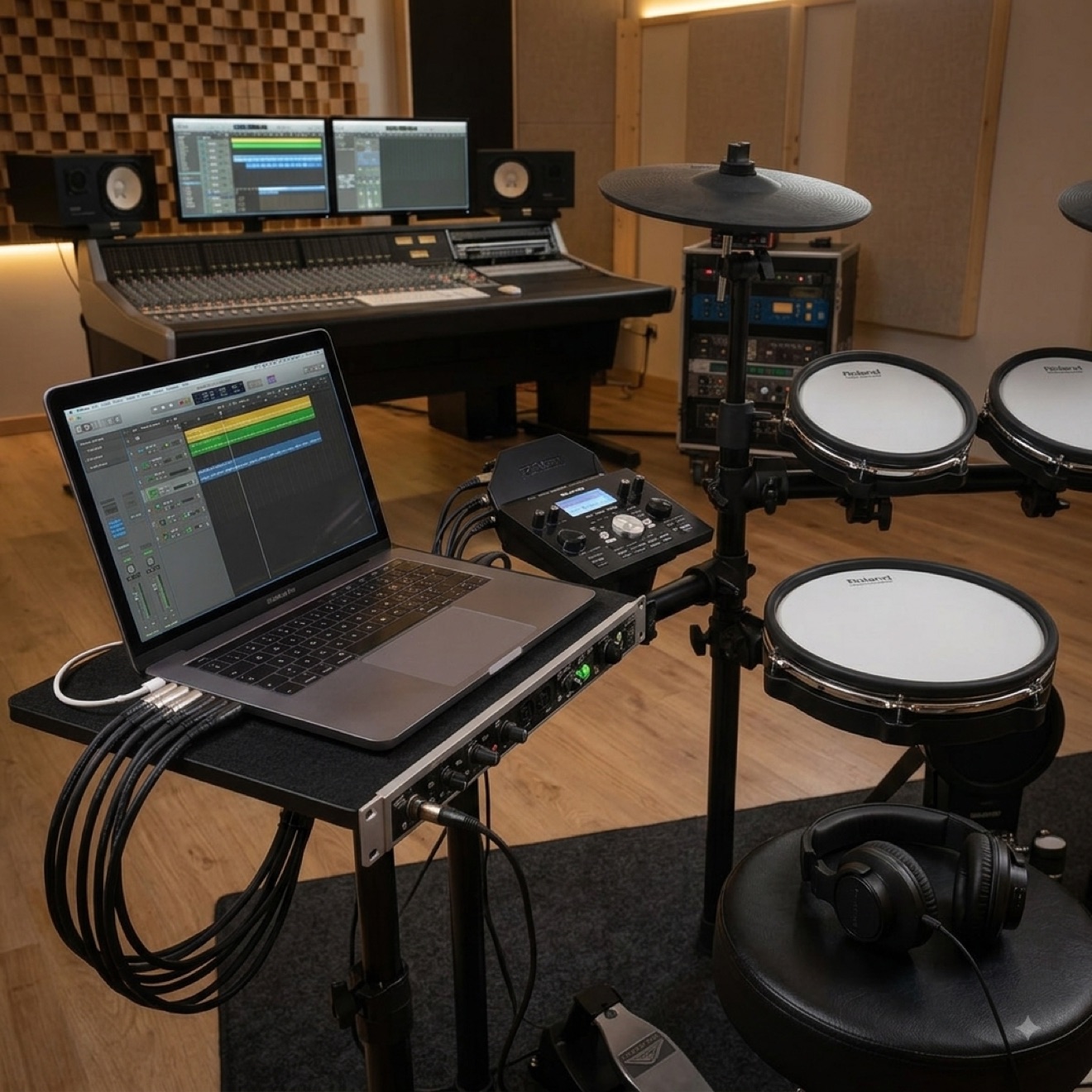
A USB/MIDI output — without it you won't connect the kit to a computer or use software like EZdrummer. Today it is standard, but it is worth checking.
A line input or Bluetooth — so you can play along to a backing track from your phone, with no extra mixer.
Separate outputs — these only become useful when playing on stage; at the start they aren't needed.
The rack nobody thinks about
A thin, wobbly rack can spoil the pleasure of playing more than mediocre samples. The kit has to stand steady under a hard stroke and not "walk" across the floor. Check too whether the heights and angles can be adjusted to your build — the instrument adapts to the player, not the other way round.
What's in the box
A trivial matter, yet one that can change the bill by a few hundred. To play you also need a stool, headphones and sticks. In our Pulse kits they are in the box; in many competing offers they are not.
Room to expand
A good kit lets you add another cymbal or tom when the need arises. That is far cheaper than replacing the whole instrument — which is why the Pulse Pro with its extra crash and fourth tom is sometimes a more sensible choice than a basic kit with a plan to buy everything later.
Frequently asked questions
How much do you have to spend on a sensible kit for home?
The realistic threshold, below which the compromises start telling on your desire to play, is around two thousand złoty for a set with mesh pads. Below that you most often get rubber pads and a wobbly rack.
How many pads does a beginner need?
Snare, three toms, kick, hi-hat, crash and ride — that is, the standard layout. On such a kit you'll play practically any rock or pop song. A second crash and a fourth tom are comfort, not necessity.
Is it worth paying extra for a better module?
If you intend to record through a computer — not necessarily, because you'll be using the software's sounds anyway and the module will serve as a controller. If you play exclusively in headphones, a better module can be heard every day.
Should I buy a good kit for a child straight away?
Better to buy a decent set than the cheapest "starter". On a good instrument a child practises longer and more willingly, and if the enthusiasm fades, gear from a recognised range sells without trouble.
Can I try a kit before buying?
If you have the chance — it is always worth sitting down and playing. Pay attention to the stick rebound off the snare, the stability of the rack under a hard stroke and how comfortably the hi-hat sits.
The criteria from this post are easiest to apply by comparing specific models side by side — see the electronic drum kits and their full specifications.
This article was originally written in Polish and translated with the help of automated tools. If anything is unclear, please contact us.