How do I choose a digital piano?
The keyboard matters most — it decides whether your practice will transfer to an acoustic piano. The rest is a question of comfort and space.
- Keyboard — every Versoni model has 88 keys. The V5 line uses semi-weighted keys; V9, V10 and V11 use weighted keys with hammer action, with resistance close to an acoustic piano.
- Voices and accompaniment — 127 voices across the line; V5 offers 206 accompaniment styles and 80 demo songs, V9 and above 160 styles and 60 demos.
- Speakers — 2 × 10 W in the V5, 2 × 12 W with a 16 × 24-bit DSP in the V9, V10 and V11. You hear the difference mainly in the bass and at higher volume.
- Cabinet — decide whether you need a closing lid or a retractable keyboard; for a living-room instrument this often settles the choice.
- Headphones — the V5 has one output, V9 and above have two, so teacher and student can listen at the same time.
We walk through the whole decision in our guide on how to choose a digital piano, cover the key mechanism itself in weighted, hammer-action and semi-weighted keyboards, and tackle the most misunderstood specification in polyphony in a digital piano.
How do the Versoni models differ?
The line is built in layers — each model adds something specific rather than simply costing more.
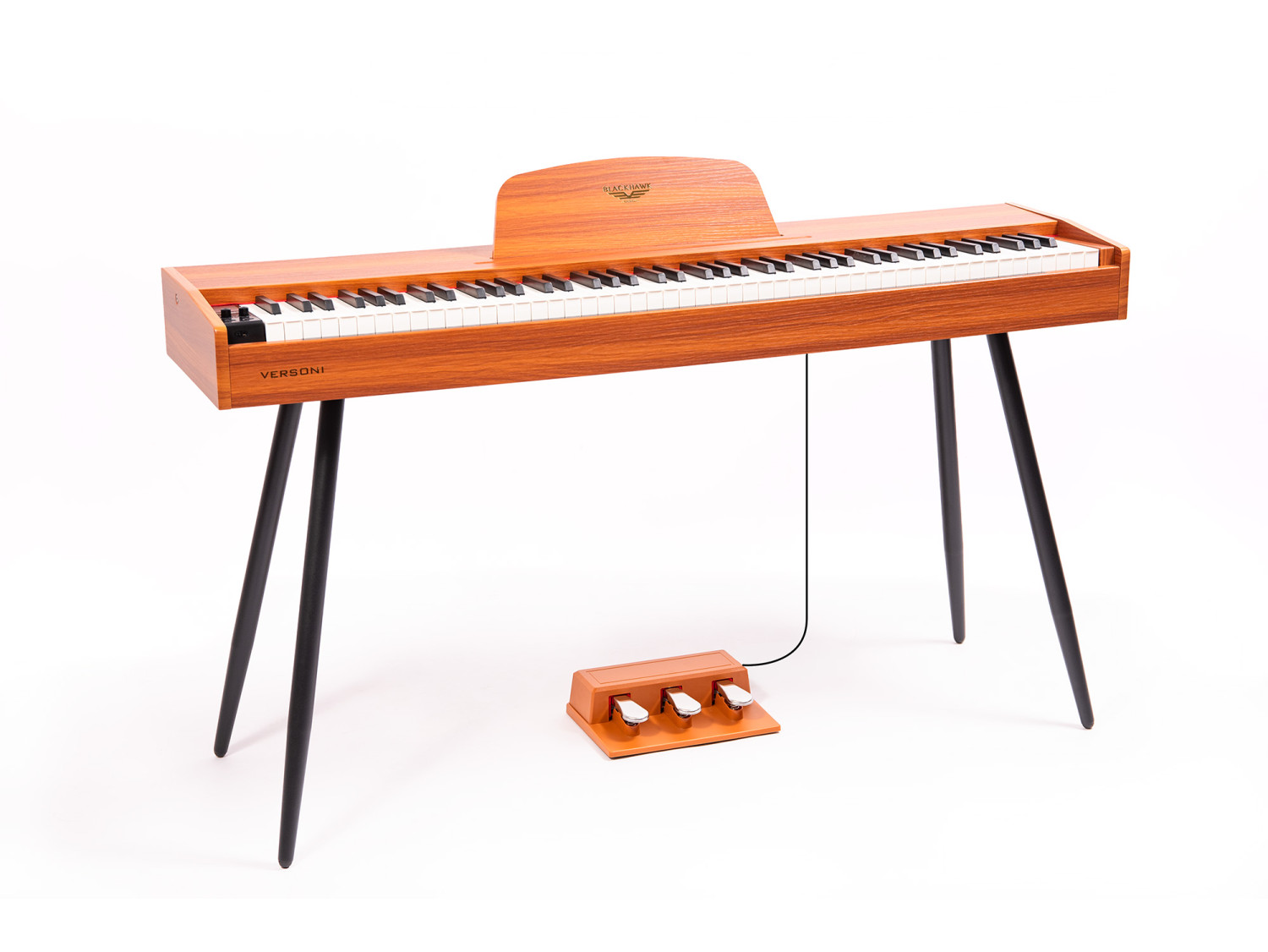
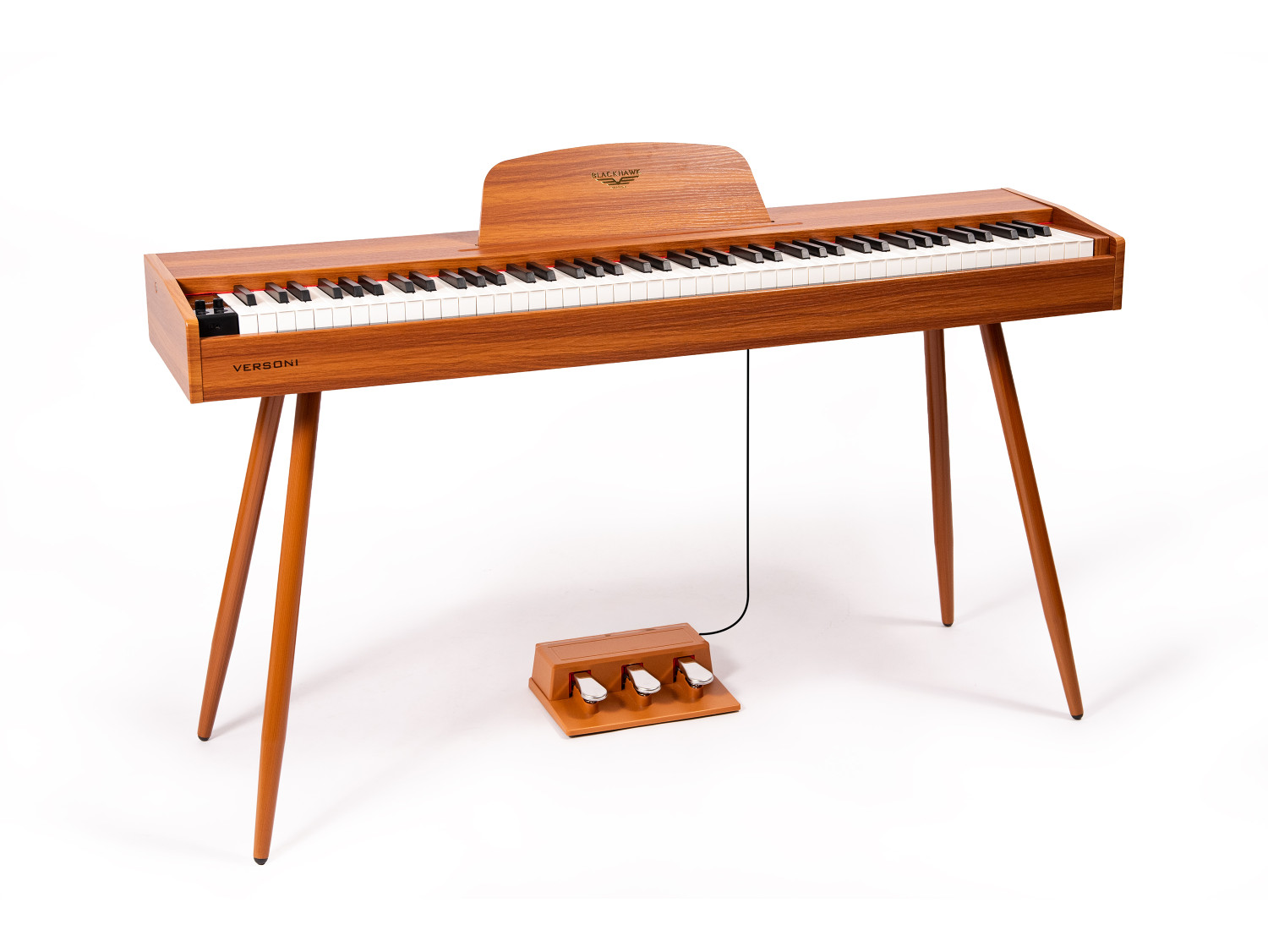
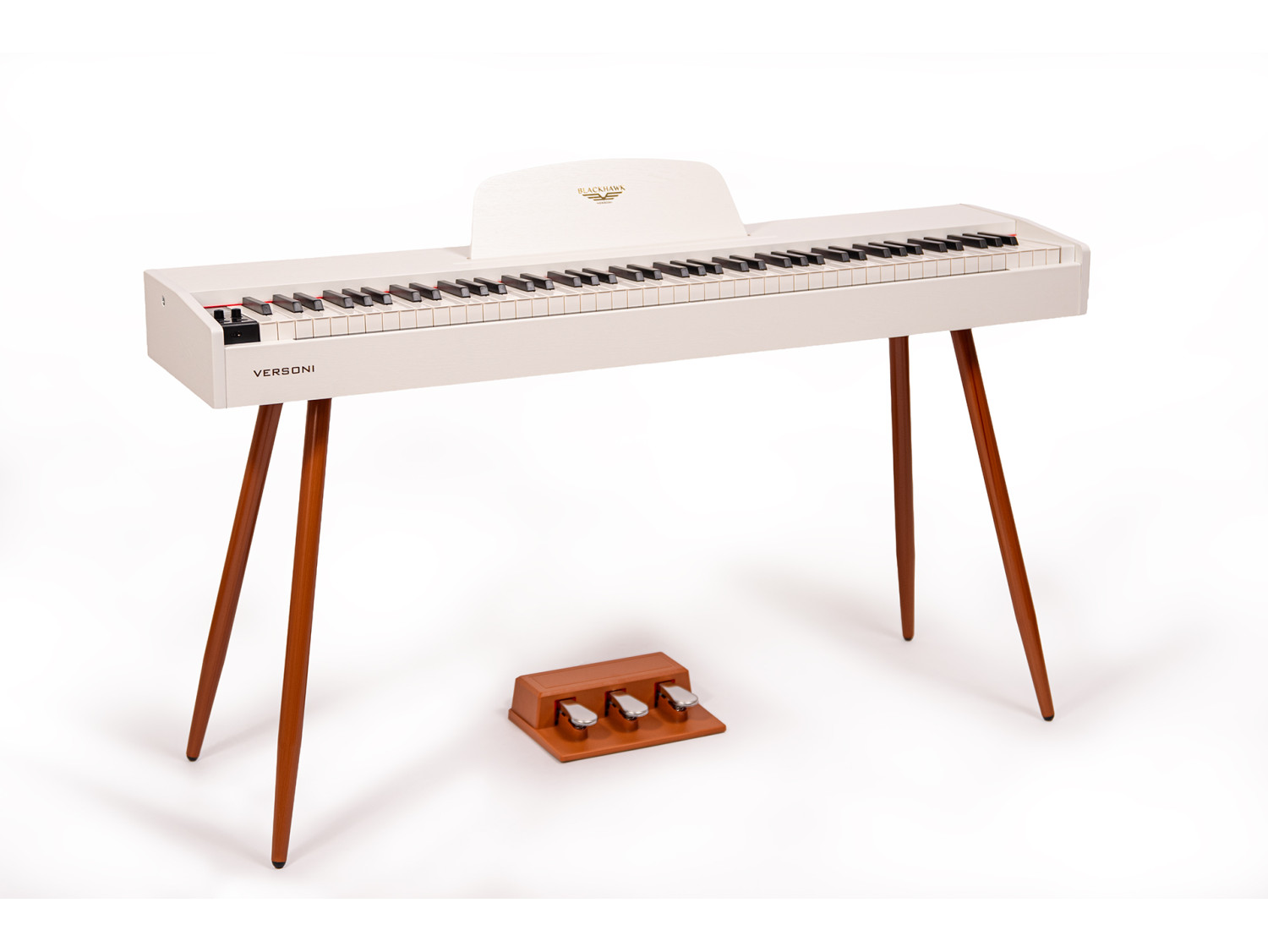
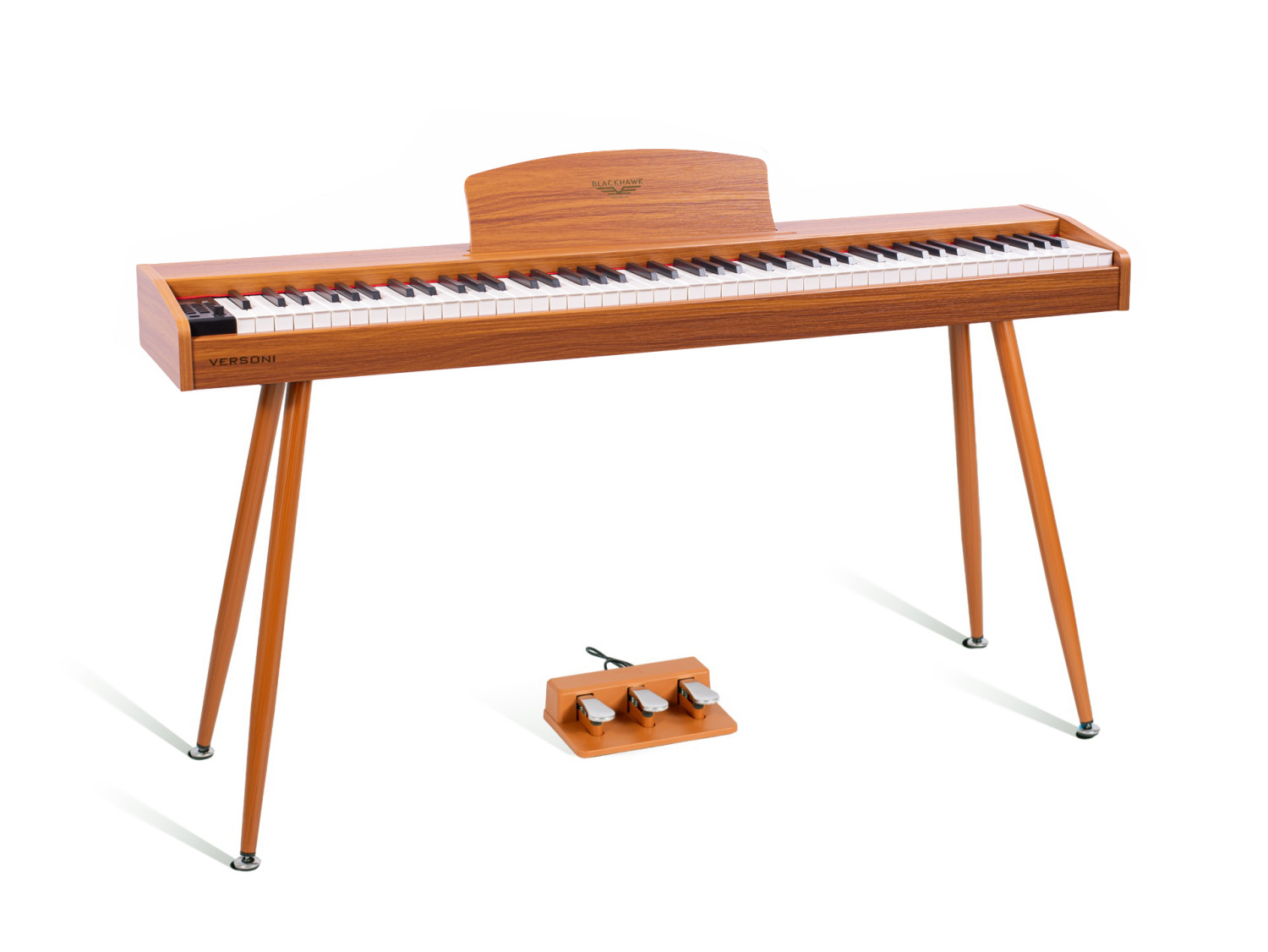
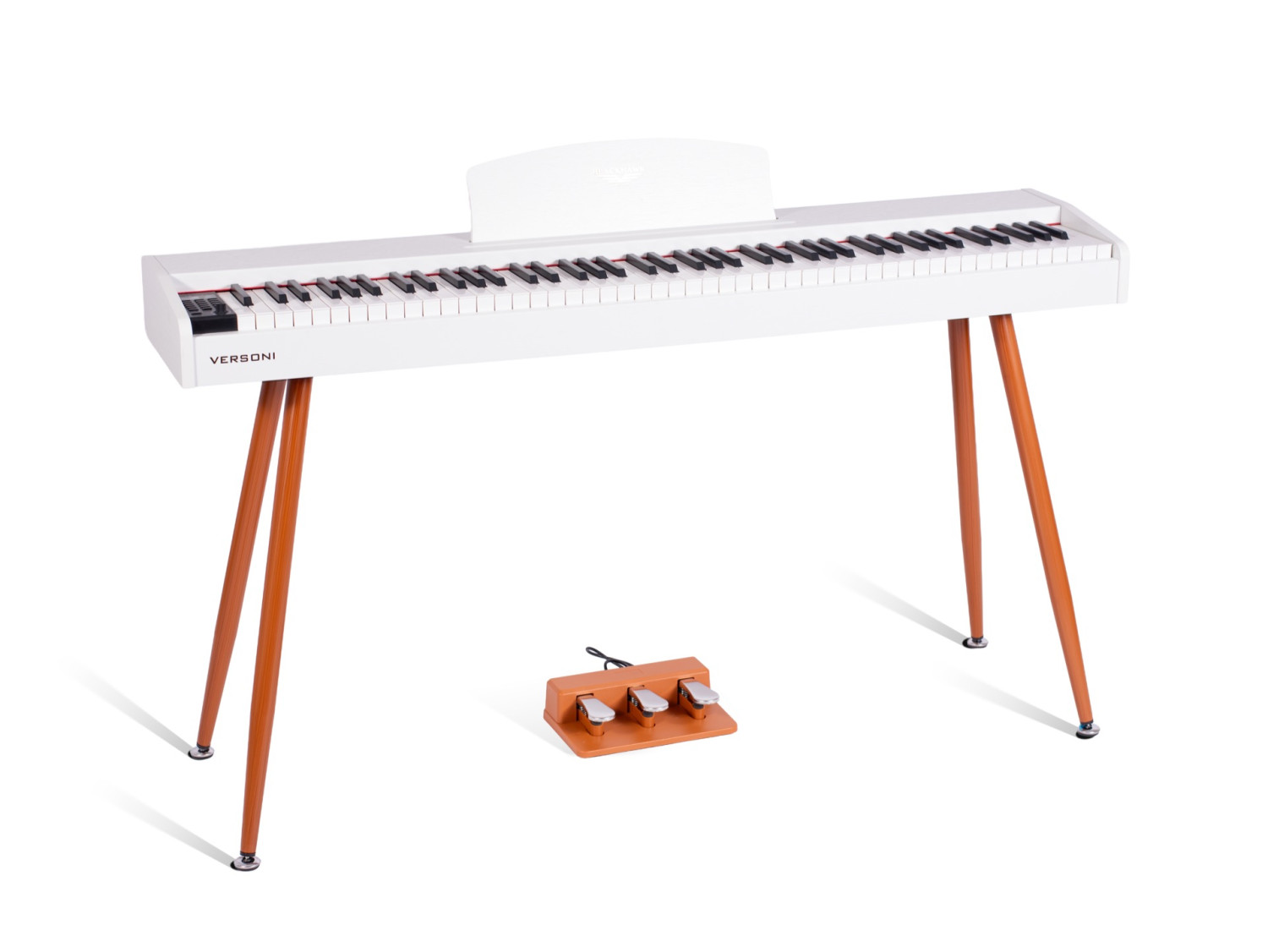
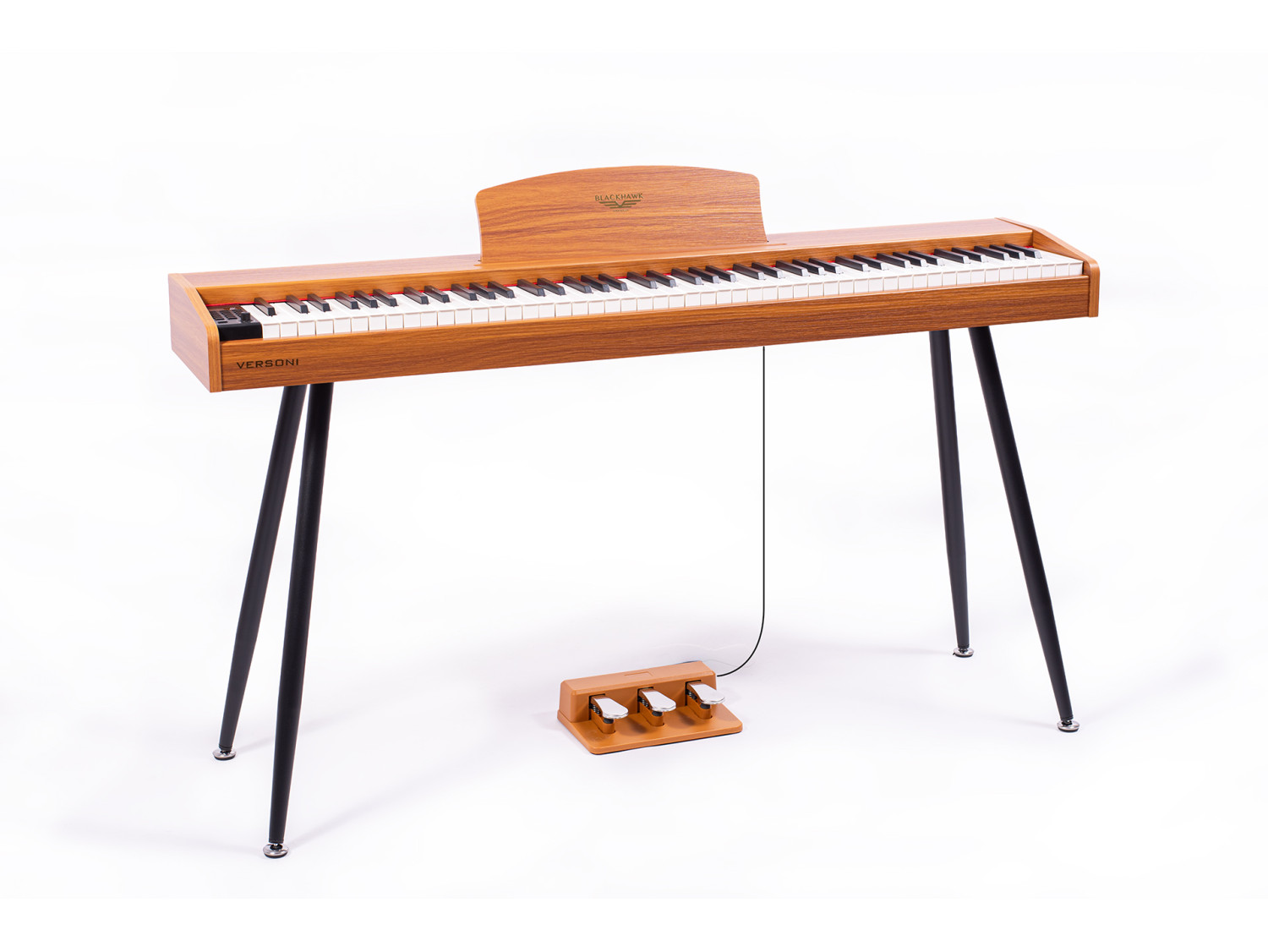
- V5 (V5N, V5WN, V5NB) — 88 semi-weighted keys, LCD display, 2 × 10 W speakers, one headphone output. 132 × 28 × 80 cm.
- V9 (V9N, V9NB, V9WN) — weighted hammer-action keyboard, colour display, 16 × 24-bit DSP, 2 × 12 W speakers, two headphone outputs. Same body as the V5.
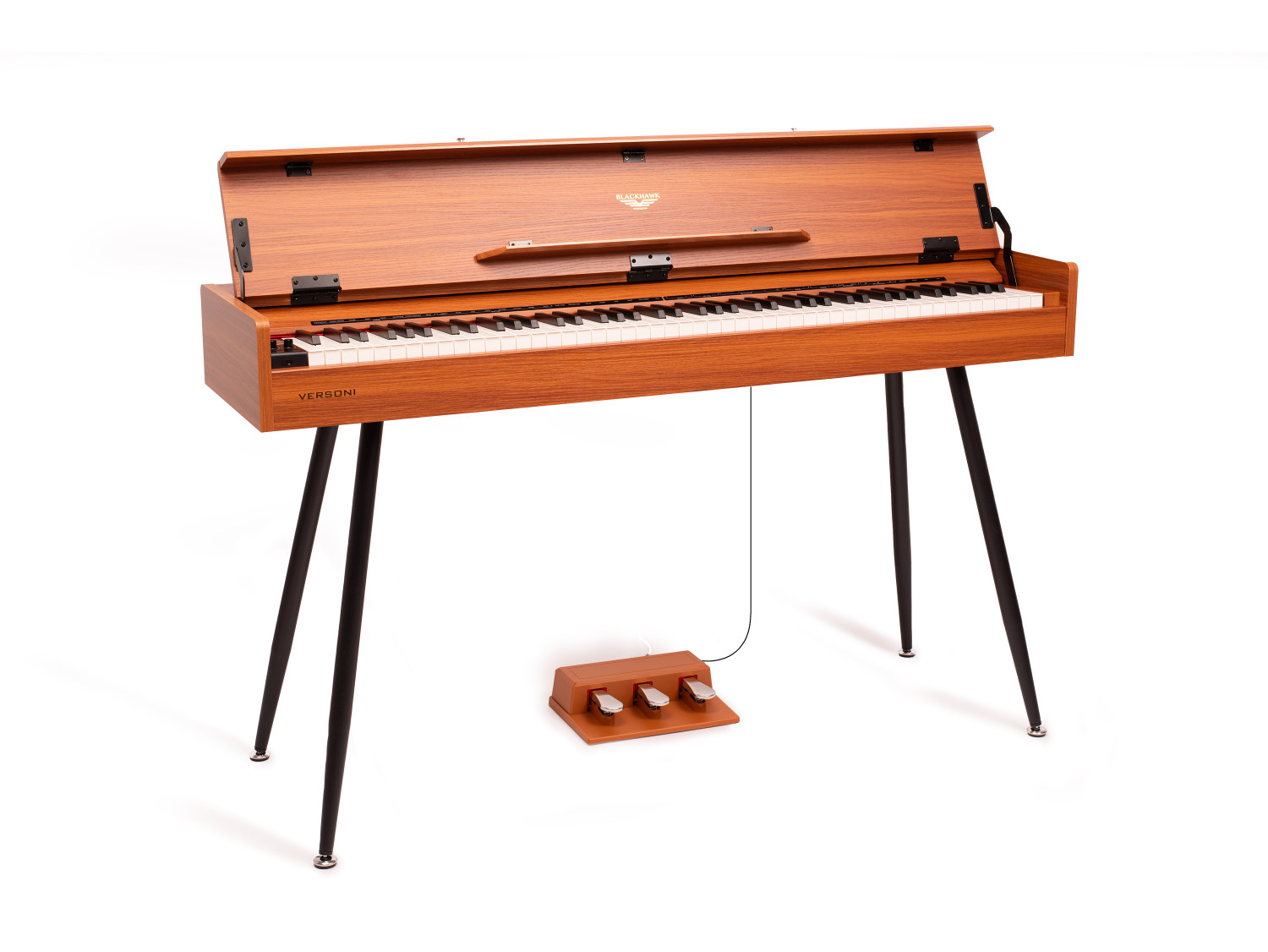
- V10NB — V9 specification plus a closing lid that keeps dust off the keys. Slightly deeper: 135.5 × 35.5 × 79.5 cm.
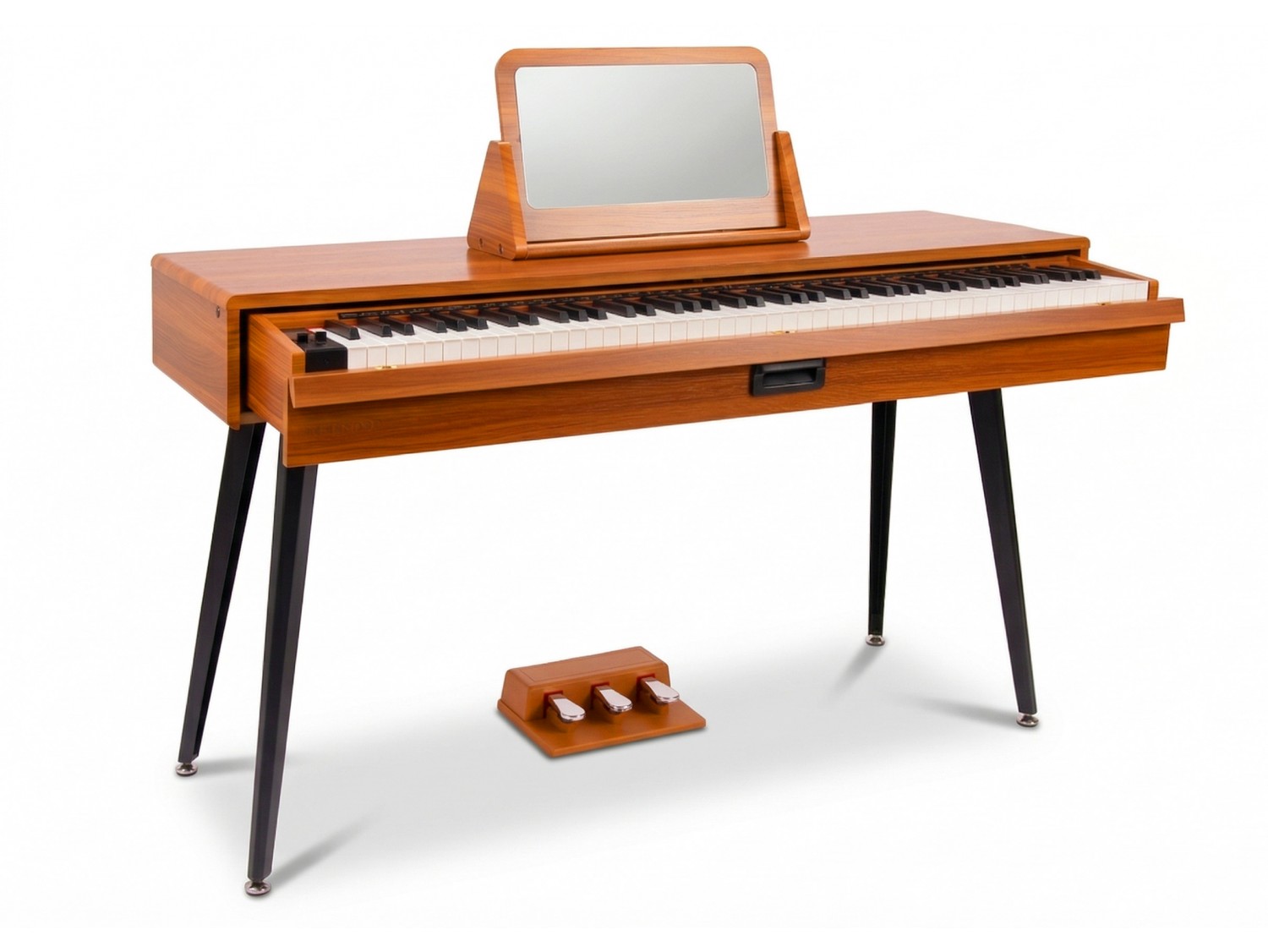
- V11B — V9 specification plus a retractable keyboard and a full worktop; closed, it reads as an ordinary piece of furniture. The reversible music rest with a mirror lets a teacher watch the student's hands.
The letters in a model name describe the finish, not the electronics — models sharing a number have identical specifications.
What does a digital piano cost?
Current prices for every model are on the list above. Three things grow with the price, and it is worth knowing which one you are paying for:
- Key mechanism — moving from semi-weighted to weighted hammer action is the biggest step in how the instrument feels, and the first thing worth spending money on.
- Amplification — stronger speakers and a DSP change how the instrument sounds in the room, but not in headphones.
- Cabinet — a lid and a retractable keyboard are about convenience and looks, with no effect on the sound.
We explain what you actually pay for in how much a good digital piano costs.
Digital piano, keyboard or acoustic?
A keyboard usually has fewer than 88 keys and a light, sprung action — fine for learning accompaniment and exploring sounds, but it does not build the strength and control a piano requires. If the goal is to learn piano, choose an instrument with a full keyboard.
Against an acoustic piano, a digital one wins on practicality: no tuning, no reaction to humidity, several times lighter, and you can play in headphones. It gives up part of the nuance of an acoustic soundboard.
We take both decisions apart in digital piano or keyboard and can a digital piano replace an acoustic one.
What can I connect the piano to?
The whole Versoni line shares the same set of connections:
- Bluetooth Audio and MIDI — stream a backing track from your phone through the instrument's speakers and pair it with a learning app.
- USB MIDI — drive software on a computer and record into your own DAW.
- USB Memory — play and save files straight from a flash drive.
- AUX IN and AUX OUT — connect an external source, or send the signal to an amplifier or PA.
- Three pedals — sustain, soft and sostenuto, as on an acoustic piano.
Where to place the instrument so that it sounds right — and what to avoid — is covered in how to position a digital piano at home. It is also worth choosing a height-adjustable bench; you will find one among the accessories.
A first piano — for yourself or for a child
Three things matter at the start: 88 keys, a touch-sensitive action and a comfortable playing position. Other features become useful later, and some — such as hundreds of accompaniment styles — are mostly a distraction in the beginning.
With a child, the most common mistake is buying a „trial” instrument that is too light and too small: within a year it needs replacing, and habits built on a sprung keyboard have to be unlearned. We set out what to watch for in a digital piano for a beginner and a digital piano for a child, and collected the pitfalls in the most common mistakes when buying a first piano.
Why Black Hawk
- Polish manufacturer — we assemble and service the instruments ourselves, and parts are available immediately.
- 24-month warranty on the whole instrument.
- 14 days to try it at home — if the piano does not suit you, send it back.
- Shipping across Europe.
Looking for a percussion instrument instead? Have a look at the electronic drum kits.


 Čeština
 Slovenčina
 Hrvatski
 Română
 Magyar
 български език
 Deutsch
 Français
 Українська
 Nederlands
 Polski